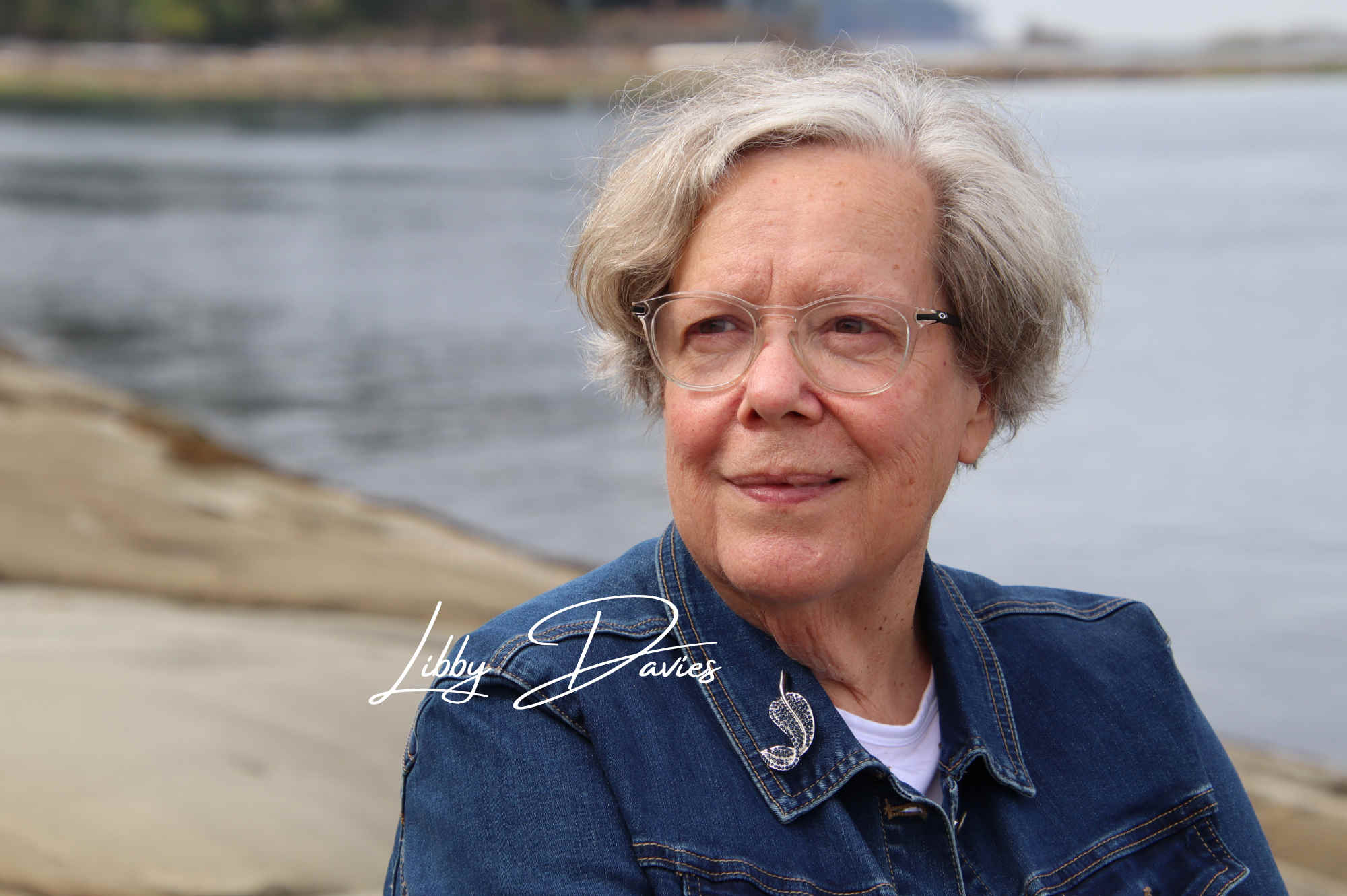
I had the pleasure of a great conversation with Charlie Angus and The Resistance in April, 2026. You can view the video here. We talked about the “how and why” of Community Organizing based on my Free and Easy Organizing Guide. Tip: there’s a guide on Community Lobbying that you can check out too!
Libby is elected as Vice President of the NDP
NDP leadership race elects Avi Lewis as leader and a new team for the party’s governing body. The full article on rabble.ca can be viewed here.
Avi Lewis elected leader of Canada’s New Democrats and Libby is elected as VP of the party
Dear Libby, CJPME congratulates Avi Lewis for winning the election to become leader of the NDP. Lewis is a longtime supporter of the Palestine solidarity movement from a socialist, anti-Zionist Jewish tradition.
For the first time, a major federal party will be led by a supporter of the Palestinian-led call for boycott, divestment and sanctions (BDS). This is a major step forward for pro-Palestine advocacy at the federal level.
We also warmly congratulate Libby Davies, co-chair of the CJPME Board, for her election as Vice President of the NDP. She ran on a slate alongside Niall Ricardo, a friend of CJPME’s from Independent Jewish Voices (IJV), who was elected President. This points to increased support for Palestine at the highest levels of the party.
Lewis has consistently made Palestine a key element of his campaign, using his victory speech to oppose Israel’s genocide in Gaza and the illegal US-Israeli war on Iran. During CJPME’s NDP leadership debate on Palestine, he endorsed a suite of movement demands, including cancelling the Canada-Israel free trade agreement, investigating Canadians serving in the Israeli military, and censuring politicians who accept all-expenses-paid junkets to Israel. You can revisit his responses to our questions by watching the video of the debate, or read our full analysis.
Even more encouraging is that every single candidate in this leadership race condemned Israel’s genocide in Gaza, and 4/5 candidates fully endorsed movement demands. Human rights has finally become a mainstream issue within the NDP, in response to the persistent advocacy of grassroots members.
CJPME is a non-partisan organization, and we seek to engage with all political parties to adopt stronger support for human rights and international law. We hope to see, and will continue to work towards, Canadian public opinion in support of Palestine becoming more reflected across all political parties.
As with any elected official, we will hold Lewis to his stated commitments and hold him accountable for his actions. We hope that the NDP under Lewis double-down on its anti-war principles and speak for the majority of Canadians who do not want their country to be complicit in genocide.
In solidarity,
Michael Bueckert, Vice President
Libby is running for Vice President of the NDP
Hello friends – I am thrilled to let you know I am running for Vice President at the upcoming federal NDP convention in Winnipeg. I care very much about the health and future of NDP and want to be a part of helping make needed changes at this critical time. I am honoured to be supporting Niall Ricardo in his bid for president. Please see my launch video here.
NDP leadership debate on Palestine
Libby participates in a panel discussion on the NDP leadership race candidates on the issue of Palestine on January 27, 2026. Watch the video here.
Hello for 2026!
A quick update from me for 2026 ! I continue to update this website with news and things of interest – including from the Archives. The contact form is regularly monitored and responses provided as needed. You can also follow my activities on FB, Instagram, X and BlueSky.
2026 begins a new venture for me – the launch of a small non profit to help non profits (sort of a handy person fix it service for non profits!) along with Kim Elliott and Matt Adams. Please check it out! groundandsky.org to see what services we provide.
We are open for business !
Best wishes
Libby
From the Archives: An excerpt from Independent Filmmaker Jase Tanner
I have been an active advocate for Free Palestine for decades. As we head into 2026, I am ever mindful of the ongoing genocide taking place and the urgent need to continue to speak out for the upholding of international law, peace and justice, and recognition of a legitimate Palestinian statehood. As a Member of Parliament I was honoured to visit the occupied territories and Gaza on two occasions. So, from the film archives of 2009, after the brutal “Operation Cast Lead”, an excerpt from independent filmmaker Jase Tanner of Vancouver, detailing our CODE PINK delegation to Jerusalem, the West Bank and Gaza. View the film here.
rabble.ca Off the Hill: Analyzing the NDP leadership race
Libby discusses the NDP leadership race on rabble.ca Off The Hill, live panel on Jan 6, 2026. Watch the video here.
Razing Palestine Book Launch, Vancouver, November 2025
Libby participates in the Razing Palestine book launch at Upstart and Crow in Vancouver. Watch the video here.
The struggle to keep Vancouver’s Downtown Eastside affordable for local residents
Concerns are raised by Libby and other individuals associated with Vancouver’s Downtown Eastside that the proposed changes to the DTES plan risk affordable housing for local residents. Read the full article here.